Woman allegedly raped and attacked with a panga – alleged rapist charge woman as activists warn against litigation abuse

Karen Painter • 23 April 2022

PRESS RELEASE ON BEHALF OF 1000 WOMEN TRUST: 22ND APRIL 2022

FOR IMMEDIATE RELEASE

Klawer-woman accused of assault by alleged rapist, assailant as alarmed activists warn against litigation abuse

A woman from Klawer who was allegedly raped and later attacked with a panga at her home by the rapist and two associates, recently spent a few hours behind bars in Klawer because the alleged assailant laid a counter-claim accusing her of assault during the panga-incident.

The woman will appear in court in Klawer on Tuesday 26 th  April 2022.

NGO’s in the forefront of the fight against gender-based violence and activists have expressed outrage at what they deem to be an alleged case of “litigation abuse” by a perpetrator in order to keep power and control over the survivor of abuse by misusing a court system against the victim.

The 32-year woman was allegedly raped in Klawer on 31 st  January 2022.

After she reported the crime to the police, and lodged a complaint, the alleged rapist and a friend subsequently attacked her and her boyfriend. According to her father, she suffered bruises and was slapped  through the face, while the attacker shouted at her: “I am going to kill you.”

Her boyfriend suffered cuts and bruises while intervening to protect her. A neighbour who heard the woman’s screams for help, alerted the police. The alleged assailants fled the scene.

According to the father of the rape survivor, the perpetrators followed the woman and her boyfriend on at least three other occasions, armed with a panga and a knife, and threatened them.

On each of these occasions, the father alerted the police. They were unable to secure the arrest of the assailants. They succeeded in arresting the men a few weeks ago.

The alleged harassment of the survivor of gender-based violence occurred at her own home, at her father’s home and at the home of a friend.

More than a month elapsed between the alleged crimes of rape, assault and harassment, and the arrest of the alleged rapist.

While in prison, the alleged rapist filed a charge of assault against the woman. According to his claim, he was assaulted when he and a friend confronted the woman and her boyfriend (the so-called Panga-incident).

The survivor or rape was arrested. It was despite expressing her innocence and assuring the police that she was terrified of the assailants with the panga and that she never even lifted a hand against one of them.

Through the Women’s Legal Centre and Legal Aid, bail of R500 was paid to secure her release.

Her boyfriend, who was also charged with assault, is still behind bars.

Warrant officer Charles Willemse, an investigative officer in the case against the women, said the man accused of raping her, claimed that she assaulted him.

He decided to proceed with the case against the woman after listening to the evidence of the man laying the charges, and the woman. He subsequently decided that there was a prima facie case against her, said warrant officer Willemse.

The woman will appear in the court in Klawer on 26 th  April on the assault-charge.

Tina Thiart, director of the NGO 1000 Women Trust, said activists are up in arms about this case, which is an example of “litigation abuse”.

She said that in the last few months there have been many instances of litigation abuse.  “If you just follow the stories of women survivors on social media you will see all the instances where perpetrators use the law to abuse women.  Fathers do not want to pay maintenance and use the courts to victimize women,

“We have seen the police being quick to open cases of abuse by women reported by rape accused and by perpetrators..  We need to raise awareness and we need to challenge this pattern.  According to international studies only 2% of men have been accused wrongfully by women. No woman is prepared to go through the ordeal of reporting for revenge, but men use the legal system to get women to drop a court case or withdraw a report,” Thiart said.

Abusive litigation can come up in several types of cases, including in protection orders, unnecessary lawsuits and family law, she added.

She said the police pay too much lip-service in assisting women who suffer gender-based violence, but the anecdotal evidence of women being turned away by police officers or simply ignored or slighted, are overwhelming.

Recently, the convenor of a #HearMeToo-session in the Railton-suburb of Swellendam (facilitated by 1000 Women Trust), heard that one woman reported gender-based violence to the local police station on 168 different occasions over many years as she had suffered physically and emotionally at the hands of an abusive husband.

“I went away from the police station empty handed and the loser on each occasion,” the abused woman told the #HearMeToo-convenor.

Wendy Pekeur, founder of the Ubuntu Rural Women, said: “There are many cases where women do not get help from the Police.” She said the police are often insensitive, or turn women away while telling them to sober up or cool down.

Press release compiled by Fanie Heyns on behalf of 1000 Women Trust. For more information, contact Tina Thiart on 0732079079.
by Lauren Zinn 26 May 2026
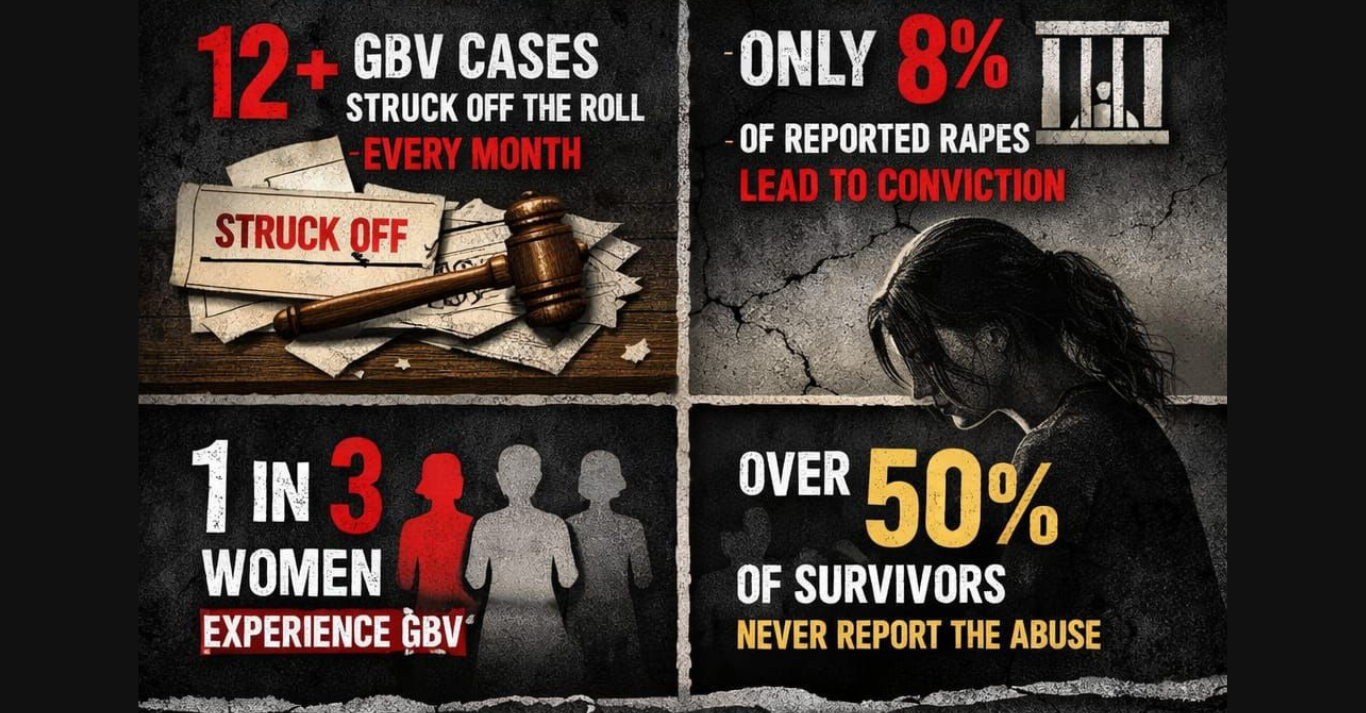
Victim blaming, secondary victimization and the low conviction rate of rape victims are at the heart of South Africa’s inability to curb gender-based violence and win the war against the widespread abuse of women in the country, says Tina Thiart, co-founder of the women-led organization 1000 Women Trust. Thiart was approached for comment after a recent shocking revelation during a parliamentary session, in which police disclosed that 837 rape cases were closed in the past three financial years because the victims could not be traced. This alarming statistic follows a recent report indicating that rape survivors in the Western Cape had been struggling to provide necessary evidence due to alleged shortages of rape kits at numerous police stations — a claim that SAPS had previously denied. The reported shortage sparked a sharp debate between police and GBV organisations, while the SAPS insisted the thousands of Adult and Pediatric Sexual Assault Evidence Kits were in stock. Sources at the time claimed over 20 police stations and FCS units lacked D1 (adult) and had few D7 (child) kits. This month, DA MP and member of the Portfolio Committee on Police, Lisa Schickerling, argued via a parliamentary question that the 837 rape cases were closed due to victims not being traced, while the police stated in response that 781 were withdrawn and 105 were undetected. Thiart said research by the Helen Suzman Foundation (HSF) and criminal justice scholars highlights that South Africa suffers from an alarmingly low rape conviction rate, with estimates showing that only 4% to 8.6% of reported rape cases successfully result in a conviction. “Unless there is a revolutionary change in the culture prevalent in the South African Police Service, that low conviction rate is set to be the new normal for the foreseeable future,” Thiart said. “The low conviction rate is tied to the fact that many officers of the SA Police Service are guilty of secondary victimization and victim blaming. Too often women are unfairly blamed as untraceable,” she said. The path from reporting to a guilty verdict is marked by severe drop-offs. Only a fraction of reported cases lead to arrests, an even smaller percentage are enrolled for trial by the National Prosecuting Authority (NPA), and less than 10% ultimately end in a guilty verdict.  Investigations into sexual offenses are frequently hindered by under-resourced police stations, poorly managed or lost dockets (for example missing statements and contact details), and institutional biases that deter victims from pursuing their cases, Thiart said. Recently, the SAPS sent a notice regarding officers who refuse to open cases, Thiart said. The notice stated that in the light of increasing complaints that it is sometimes difficult to register cases at police stations, all citizens should be aware of the following SAPS National Instruction regarding the opening and registration of criminal cases. Refusal by SAPS members to assist complainants in opening a criminal case is a violation of National Instruction 3 of 2011. It has been reported that officers at various police stations are refusing to open cases, especially in matters involving women and children, for reasons such as: The complainant cannot identify the suspect by name. The complainant did not bring the suspect to the police station. The crime did not occur within that police station’s jurisdiction. The officer believes the case is not serious enough. Complainants are told to resolve the matter themselves with the suspect. The notice acknowledges that it is unacceptable. National Instruction 3 of 2011 state that a SAPS member who receives a complaint must interview the complainant to determine whether the complaint meets the requirements of the specific offence. Complainants may never be referred to another police station, even if the crime occurred in another station’s area. The Community Service Centre (CSC) must ensure that complainants or persons reporting crimes are treated courteously and that a full sworn statement is taken from the complainant. Complainants are not sent to another station to report a case. “But the notice by the SAPS is an acknowledgement of guilt. And why do they make the public aware of this wrong action by their own officers, instead of enforcing the law at police stations, Thiart said. Marinda Lottering, a GBV-Warrior of 1000 Women Trust in the Central Karoo, said she has seen multiple cases where the perpetrator of gender-based violence approach the police and make a case against the victim and the police who are friendly with the offender then side with the perpetrator and shows the victim the door. “Too many police officers think they are elevated above gender-based violence,” Lottering said. “Most police officers do not even know the new GBV Amendment bill and when confronted by GBV-activists about that ignorance, they become arrogant and unhelpful,” Lottering added. Cynthia Khumalo, an ambassador of 1000 Women Trust, says the Matjhabeng local municipality has the highest incidence of gender-based violence in the Free State, yet is very poorly resourced to deal with the matter. “In Welkom we are ranked number two in terms of gender-based violence in the Free State, yet there are only two police stations actively handling GBV-cases,” Khumalo added. “There is also concern about secondary victimization, as victims are not always treated with the necessary empathy and support,” Khumalo added. The second pillar of South Africa’s national strategic plan on gender-based violence and femicide which provides a framework to tackle the pandemic, is prevention and rebuilding social cohesion, said Khumalo. It centres on changing harmful societal behaviour and social norms and includes shifting away from toxic masculinity. But the focus should not only be on civilians in communities. There should be a vigorous focus on the police, in order to address the very harmful culture towards women prevalent within the corridors of police offices in South Africa, Khumalo added. The 1000 Women Trust is women-led NGO dedicated to eradicating gender-based violence and femicide (GBVF). Operating for over two decades, the Trust mobilizes resources, offer trauma training, and support community-based organizations to empower women and girls. For more information, contract the Trust on (061) 4690479 or send a mail to info@1000women.co.za .
by Lauren Zinn 22 May 2026
Claudia Roodt remembers 11 th May 2017 with glee and joy – a day she spoke at the 1000 Women 1 Voice annual gala luncheon at the CTICC, a day on which her address about human connection signaled a career shift to human development, and relational therapy. Roodt is a motivational speaker, relational and trauma therapist and owner of Designed to Connect. The topic on 11 th May 2017 at the CTICC was “What do you do with intention.” “Our human need is to connect and we do not connect and build relationship intentionally. We let it go and this is how human trafficking is born,” Roodt said. Roodt said on that day she spoke about human trafficking and warned about how trafficker can pose as surrogate boyfriends, showering unsuspecting victims with gifts and attention before eventually selling them off to other human traffickers. “We all need human connections, and the ability to build and protect connections are vital to human relationships,” Roodt said. “What happens when we do not have good attachments or connections. One of the focal points of my own practice is to ask if you had good connections in your own family. Are there intergenerational cycles that causes trauma and can and must be broken,” Roodt asked. “It takes one person to break the cycle of five generations of disconnect and dysfunction,” Roodt said. “In my sessions, I teach people how to identify trauma, deal with it and how to find that connections again,” Roodt explained. “The poor relationships – for example – between your dad and mother can be carried in a child’s stress response. You struggle to connect and feel fragmented. A person might develop to become a people pleaser and does not live authentically or develop good connections with others due to the emotional disconnect they had while growing up.” Roodt had to learn to establish healthy connections in her own life and heal emotionally and spiritually. She grew up in a dysfunctional family in Citrusdal in which everything revolved around academic feats. If you performed academically, you were ok, if not, you were isolated. In 1978 while only 11, she initially told her parents she is number one in her grade, and when they were at the prize giving and the truth emerged, her father burst into her room and told her she was an embarrassment to the family. “As far as I am concerned, you don’t exist anymore,” he said. “As family we lived in relational poverty. I was unseen, unacknowledged and unappreciated,’ Roodt said. What happens when there is this glaring hole in the upbringing of a child. He or she can escape in wrong relationships in order to feel appreciated and loved, Roodt explained. Roodt’s own scars were healed after three failed marriages. She met her husband and soul mate, Tiaan Roodt, in December 2015 and the two got married in 2017. Since 11h May 2017, Roodt has become a trusted associate of 1000 Women Trust, and has played a role in co-developing the trauma training material of the Trust which has touched the lives of tens of thousands of women, children and parents. Roodt also runs her successful Designed to Connect practice in Kraaifontein. Currently, she is busy with a certificate program in traumatic stress studies through the trauma research foundation of Bessel van der Kolk International. She is also undertaking an international course to be a Holding Space Coach. Through the Arizona Trauma Institute Roodt is also busy with a certified clinical trauma specialist individual course. Through Mark Wolynn she is also busy with a course on inherited family trauma. Roodt is also undergoing root cause therapy training through the Center for Healing in Australia. For more information, Roodt can be reached on 083 5873269 or can be mailed on claudiaroodt@gmail.com. 1000 women Trust is a is a South African women-led organization dedicated to fighting gender-based violence (GBV) and femicide. It empowers women and children through education, economic empowerment, and accessible support systems. For more information, contact the Trust on (061) 4690479 or email them on info@1000women.co.za.
by Lauren Zinn 20 April 2026
— and South Africa cannot afford to look away
by Karen Specter 24 February 2026
1000 Women Trust: an open invitation to invest CSI-funds and empower SA women 1000 Women Trust has become a premier change agent in South Africa in empowering women and breaking cycles of violence through its transformative Project Orange, its chatbot-initiative and its Talking to Boys-incentives. Now this non-profit organization, working to advance gender equality, is inviting South African companies with CSI-funds (Corporate Social Investment) to partner with the Trust to increase its footprint – its life-changing impact on communities in all nine provinces. “By investing your CSI-funds in our Project Orange, our GBV-Warriors and our Chatbot-Initiative, you can receive a 18 A certificate and save tax, while simultaneously helping 1000 Women Trust to fulfil its twin mission – the eventual eradication of gender-based violence while transforming women into inspirational community and business leaders,” said Tina Thiart, co-founder and trustee of 1000 Women Trust. “As public benefit organization, 1000 Women Trust can issue that section 18 A tax certificate for qualifying donations, allowing your contribution to make both a social and financial impact,” Thiart added. The Trust has embarked on multiple campaigns the past 24 years, benefitting tens of thousands of SA women and we can show our impact. Included please find our Fact Sheet and legal information. For more information visit www.1000women.co.za 1000 Women Trust is a South Africa–based non-profit organisation working to advance gender equality and prevent gender-based violence through education, empowerment, access to resources, and collective action. For media enquiries and further information: Communications Office 1000 Women Trust. Email: info@1000women.co.za Phone: 061 469 0479 Website: https://1000women.co.za .
by Karen Specter 29 January 2026
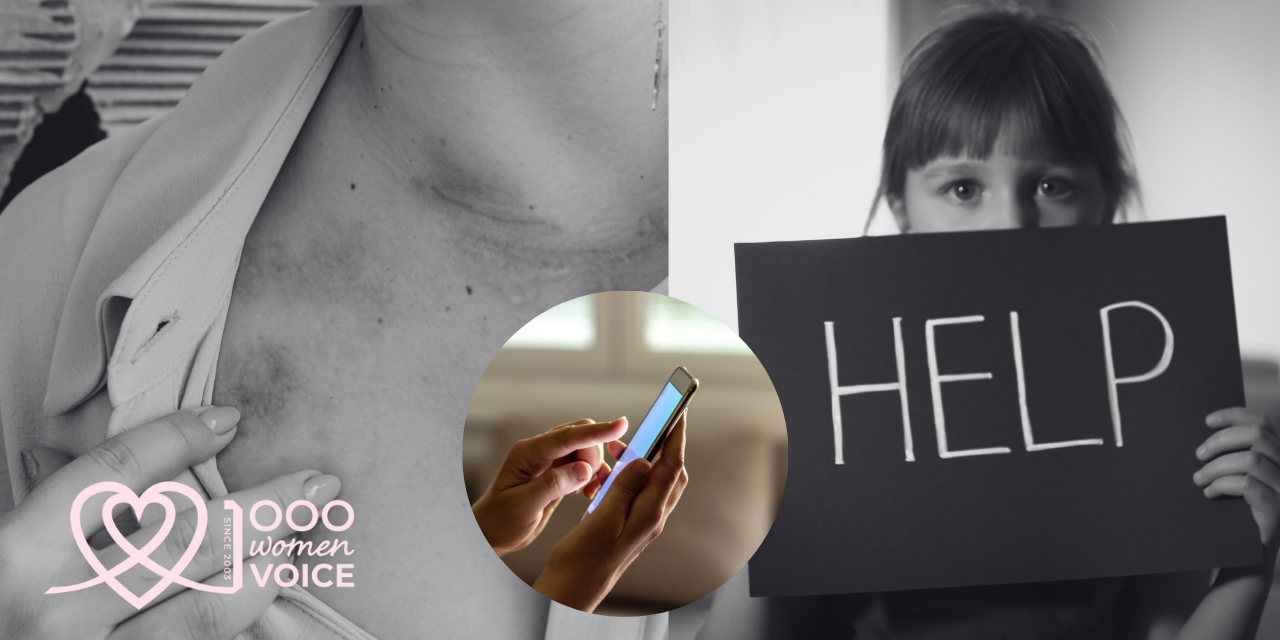
Chatbot-initiative ‘a game-changer for women trapped in abusive relationships’ The women-led organization 1000 Women Trust has launched a Chatbot-initiative to provide a 24-hour service to women and children, an intervention set to become a new benchmark for South African organizations working with survivors of gender-based violence. “We developed and completed the Chatbot Initiative, a 24-hour WhatsApp technology-based tool which women and children can access support and educational resources at any point in time on their mobile devices,” said Tina Thiart, co-founder and trustee of 1000 Women Trust. “The real advantage of a tool like the 1000 Women Chatbot lies in how it bridges gaps for women who previously had no access to structured, immediate, and safe guidance,” Thiart said. “Many women in rural or underserved communities may not have access to shelters, councillors, or legal aid. A chatbot can provide instant information via a mobile phone, which is often more accessible than in‑person services. “Unlike human services limited by office hours, the chatbot is always on, offering support at any time of crisis or need. This is why 1000 Women Trust’s Chatbot-initiative is set to be a game changer for the industry,” Thiart said. “The Chatbot-initiative is set to be a lifesaver for women trapped in abusive relationships,” said Bianca Charles, office manager of 1000 Women Trust. “A woman or girl in distress of need can be offered immediate relief as the Chatbot provides a comprehensive database of helplines and centres for immediate assistance,” says Charles. “The Chatbot-initiative offers women access to trauma training and anti-bullying material developed by 1000 Women Trust. It also provides potential lifesaving information like how to get a protection order as well as legislation about women’s rights,” said Charles. “In the first quarter of 2025, the official crime statistics revealed that 10688 rape cases were recorded, while the number of sexual offences totalled 13453. A Human Science Research Council study revealed recently that 7.3 million of SA women were subjected to physical violence in their lifetime. Therefore, the Chatbot-technology is critical,” Charles emphasized. “Unlike human services limited by office hours, the chatbot is always on, offering support at any time of crisis or need,” Charles said. Traditional campaigns often focus on raising awareness, but the chatbot provides immediate, actionable guidance — safety planning, and access to resources, Charles added. “In essence, the chatbot initiative sets a new standard by bridging the gap between awareness and empowerment. It shows that organizations can go beyond telling women “GBV is wrong” to actually helping them escape, rebuild, and thrive,” Charles said. The chatbot-initiative can become an invaluable research ally in the fight against the scourge of GBV, according to Charles. “Anonymized usage data can help organizations understand patterns – like what women ask most, where gips in service delivery exist and which resources are most needed. This evidence-based feedback can allow NGO’s and policy makers to refine strategies in real time,” Charles said. The initiative is the product of a four-month research, development and refinement phase by the Trust and their technology partners. The Chatbot offers 24/7 guidance and safe information, is accessible to all communities and will include stories of hope and resilience as well as training on rights and resources, says Thiart. On WhatsApp, it’s free, fast, and always there when you need it. How to Register 1️⃣ Save 087 373 1585 as a WhatsApp contact 2️⃣ Send “hi” 3️⃣ The chatbot will invite you to complete a sign-up form 1000 Women Trust is a South African non-profit organization dedicated to combating gender-based violence (GBV) and femicide through advocacy, education, and, skill-building. For over 20 years, it has empowered women, trained over 10,000 trauma councilors, and supported community projects to power, inspire and empower women. For more information, visit the Trust’s website on 1000women.co.za or phone (061) 4690479.
by Karen Specter 25 January 2026
1000 Women Trust trauma support training launched on 26 th January 1000 Women Trust has announced the launch of the trauma support training via the 1000 women 1 Voice Chatbot, on Monday 26 th January 2026. The trauma support training is a pivotal part of 1000 Women Trust’s work and has empowered and inspired communities throughout South Africa since its inception. The 1000 Women 1 Voice Chatbot aims to create a highly accessible and safe digital tool for providing information on Gender-Based Violence (GBV), trauma support, and confidence-building skills, said Tina Thiart, co-founder and trustee of 1000 Women Trust. How to register 1️⃣ Save 087 373 1585 as a WhatsApp contact 2️⃣ Send “hi” 3️⃣ The chatbot will invite you to complete a sign-up form Once registered, you’ll be able to: • Access trauma support training courses • Explore resources and helplines • Build confidence and skills • Participate in meaningful research to drive action for women The 1000 Women Trust is a South African Women's Rights Organisation dedicated to combating gender-based violence and femicide (GBVF). For over two decades, we've been empowering GBV Community Organisations nationwide, advocating for change and resilience. At 1000 Women, we stand with survivors and the organisations supporting them. We believe in equipping women with knowledge, skills, and resources to chart their own paths towards solutions. Our efforts aim to inspire, educate, and empower women, driving towards gender equality in our communities. For more information about the trauma support training, contact our office on 0614690479 or info@1000women.co.za_ fo@1000women.co.za .
by Karen Specter 24 January 2026
Upcoming launch of the 1000 Women Trust chatbot The 1000 Women Trust is thrilled to announce the launch of our new chatbot, a powerful digital tool created to advance our mission of Inspire, Educate, Empower, and Equip women and children, said Bianca Charles, office manager of 1000 Women Trust. This innovative platform is designed to raise awareness about Gender-Based Violence (GBV) and femicide, while offering practical support and resources to communities across South Africa, Charles added. Through the chatbot, we will: Inspire through stories of hope, resilience, and courage. Educate and Empower through training courses and education about GBV laws and procedures. Equip women and children with the skills and resources to support their communities. The chatbot will be a WhatsApp technology-based tool, making it the most accessible platform for communication and learning. With its 24-hour service, women and children can access support and educational resources at any point in time, ensuring help and guidance are always within reach, Charles said. The launch of this chatbot marks a bold step forward in harnessing technology for social good. By combining innovation with compassion, we are creating a safe, accessible space where women and children can find guidance, strength, and solidarity, Charles explained. 1000 Women Trust is a South African Women's Rights Organisation dedicated to combating gender-based violence and femicide (GBVF). For over two decades, we've been empowering GBV Community Organisations nationwide, advocating for change and resilience. South Africa grapples with alarming GBV statistics. At 1000 Women Trust, we stand with survivors and the organisations supporting them. We believe in equipping women with knowledge, skills, and resources to chart their own paths towards solutions. Our efforts aim to inspire, educate, and empower women, driving towards gender equality in our communities. For more information, contact the Trust on 0614690479 or email us on info@1000women.co.za .
by Karen Specter 1 January 2026
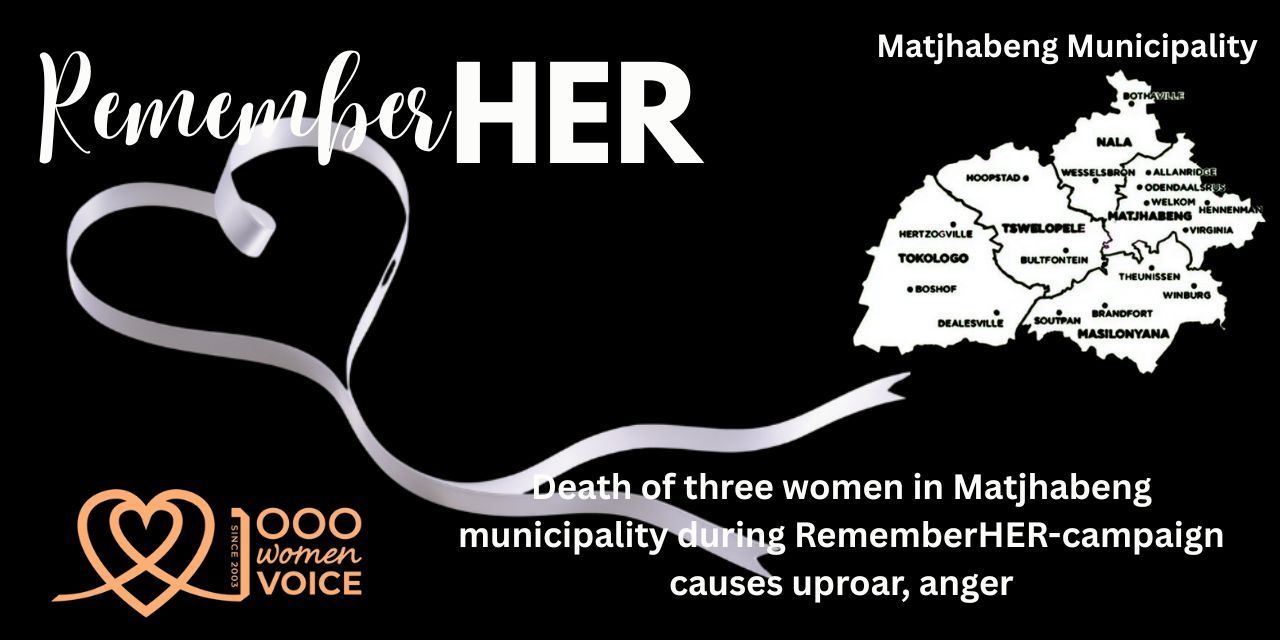
Death of three women in Matjhabeng municipality during RememberHER-campaign causes uproar, anger The gender-based violence related murders of three women from the Matjhabeng local municipality during 16 days of activism against GBV and femicide, has caused an uproar in the Free State just days before a RememberHer-meeting in Welkom. The woman-led organization 1000 Women Trust launched RememberHER, a nationwide mobilization to honour the women and children whose lives were lost through gender-based violence, as part of the global 16 Days of Activism against Gender-Based Violence and femicide. “Through storytelling, remembrance, and collective healing, we invite all women’s organisations nationwide to join hands with us by creating “memory corners” – sacred spaces where communities can gather, reflect, and heal,” said Tina Thiart, co-founder of 1000 Women Trust, when announcing the RememberHER-initiative. The death of Mpho Gladys Nkhobo (46), stabbed to death by her husband in the Matjhabeng local Municipality, has rocked the communities. Glenda Roberts (61), an experienced social worker at the Welkom-office of the Lejwelaputsai-district, was mugged and stabbed to death on her way to work in the morning. And Masesi Merriam Saudi from Thabong, also in the Matjabeng local municipality, was murdered. Sy was on her way to work when she went missing. Says Cynthia Khumalo, a GBV-Warrior and ambassador of 1000 Women Trust: “The Bothaville, Henneman, Odendaalsrus, Welkom and Bultfontein areas are hot spots of gender-based violence and femicide in the Lejweleputswa district.” With regards to rape and sexual offences, the Free State recorded the second highest rape ratio in the country (24.4 %), with significant increases in sexual assaults in some quarters. “We mourn the senseless killings of three innocent women,” said Thiart. “GBVF has just been declared a national disaster. It is pivotal that the South African Police Force (SAPF) act swiftly and decisively to arrest the murderers of these women and that justice is served without delay,” said Thiart. “We need to send the right message to the communities about GBVF,” she added. Thiart said one of the objectives of RememberHER during 16 days of activism is to honour the women who lost their lives through GBV. The scale of GBV is horrific is shocking. Between April 2023 and March 2024, 5,578 women were murdered in South Africa. In just the first quarter of 2025, the country lost 837 women through femicide. That translates to roughly nine women killed every single day. 1000 Women Trust is a South African Women's Rights Organisation dedicated to combating gender-based violence and femicide (GBVF). For over two decades, we've been empowering GBV Community Organisations nationwide, advocating for change and resilience. For more information, contact 1000 Women Trust on (061)4690479.
by Karen Specter 1 January 2026
Beyond 16 Days launched to expose ‘weakest links in GBV-response chain’ The women-led organization 1000 Women Trust has launched its Beyond 16 Days-initiative, to hold government, the judiciary and the police accountable and to stand in solidarity with South African women who bear the brunt of increased gender-based violence during the summer holiday period, said Tina Thiart, co-founder of 1000 Women Trust. Thiart said during the 16 Days of Activism against gender-based violence and femicide, there is heightened awareness of the scourge. But the biggest challenge comes after 16 Days. “In the holiday period in South Africa, there is a sharp increase in gender-based violence and femicide due to alcohol abuse, stress, and a weakened service delivery by the police and the judiciary,” said Thiart. “Shelters, social services and the police are understaffed or unresponsive. Survivors are left without recourse and increasing risk and trauma. “1000 Women Trust will monitor and document these failures by tracking reports of inaccessible services and collecting survivor testimonies,” Thiart said. Thiart said the police and the courts are often the weakest links in the GBVF response chain due to slow investigations, poor survivor treatment, and low conviction rates undermining trust. “1000 Women Trust can play a bridge-building and accountability role, mobilizing survivors, communities and donors to push for systemic prioritization,” Thiart said. On Thursday 18 th December 2025, 1000 Women Trust will be picketing at the magistrate court in Welkom demanding accountability and action from the police against perpetrators of gender-based violence. The event starts at 10 am. “There has been recent gender-based violence-related killings of women during 16 Days of Activism in the Letjweleputshwa-district, which prompted the action in Welkom. The Bothaville, Henneman, Odendaalsrus, Welkom and Bultfontein areas are hot spots of gender-based violence and femicide,” said Cynthia Khumalo an ambassador of 1000 Women Trust. The death of Mpho Gladys Nkhobo (46), stabbed to death by her husband in the Matjhabeng local Municipality, has rocked the communities. Glenda Roberts (61), an experienced social worker at the Welkom-office of the Lejwelaputsai-district, was mugged and stabbed to death on her way to work in the morning. And Masesi Merriam Saudi from Thabong, also in the Matjabeng local municipality, was murdered. Sy was on her way to work when she went missing. With regards to rape and sexual offences, the Free State recorded the second highest rape ratio in the country (24.4 %), with significant increases in sexual assaults in some quarters, Thiart said. Members of the 1000 Women Trust Gauteng committee will be Kagiso police stations on Friday 19 th December to demand accountability from the police and the judiciary about a child who has been missing since June 2024. The child was with her biological as well as her stepmother when she went missing in June 2024, said Thiart. Thiart said 1000 Women Trust do have a network of more than 50 warriors in GBV-hotspots, providing safe spaces to women who are subjected to violence, in order to support them and accompany them in the immediate aftermath of an attack to a police station and court the next day. “Our call to action is that communities must help us by reporting service failures by the police, courts or clinics. We also ask the public to support our safe room-service by volunteering to help or donating goods to the safe rooms,” Thiart added. “We also ask the community to amplify the voices of survivors and share it on whatsapp, radio or community platforms,” Thiart asked. Thiart said gender-based violence and femicide have been declared a national disaster, and the purpose of Beyond 16 Days is to ensure there is stronger government support for the victims of gender-based violence in the holiday period. “Beyond 16 Days is part of a global campaign and will proceed until 10 th January 2026,” Thiart said. “This initiative is a continuation of our RememberHER-campaign we initiated during 16 Days to honour the lives and legacies of women who lost their lives to gender-based violence before. This campaign mobilized communities to commemorate the lives lost to the second pandemic,” Thiart said. “From April 2023 to March 2024, a total of 5778 women were the victims of femicide. If South Africans do not act in unison, these figures will increase. We must eradicate the second pandemic, but we need a unified front in order to make it happen and that is why Beyond 16 Days is critical,” Thiart added. The 1000 Women Trust is a South African Women's Rights Organisation dedicated to combating gender-based violence and femicide (GBVF). For more information, contact 1000 Women Trust on (061) 4690479 or email them on info@1000women.co.za .