Victim blaming by police at the heart of the low conviction rate with rape cases, says Thiart
Victim blaming, secondary victimization and the low conviction rate of rape victims are at the heart of South Africa’s inability to curb gender-based violence and win the war against the widespread abuse of women in the country, says Tina Thiart, co-founder of the women-led organization 1000 Women Trust.
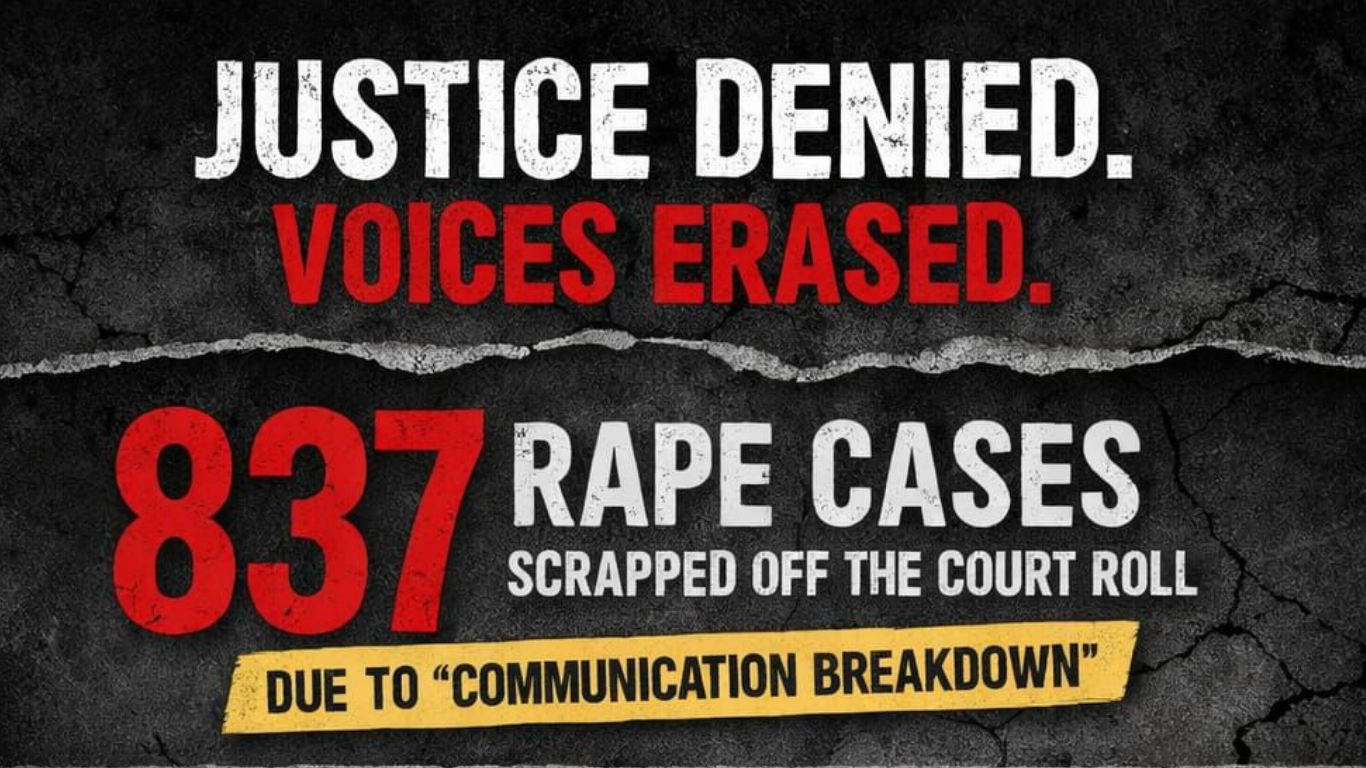
Thiart was approached for comment after a recent shocking revelation during a parliamentary session, in which police disclosed that 837 rape cases were closed in the past three financial years because the victims could not be traced.
This alarming statistic follows a recent report indicating that rape survivors in the Western Cape had been struggling to provide necessary evidence due to alleged shortages of rape kits at numerous police stations — a claim that SAPS had previously denied.
The reported shortage sparked a sharp debate between police and GBV organisations, while the SAPS insisted the thousands of Adult and Pediatric Sexual Assault Evidence Kits were in stock.
Sources at the time claimed over 20 police stations and FCS units lacked D1 (adult) and had few D7 (child) kits.
This month, DA MP and member of the Portfolio Committee on Police, Lisa Schickerling, argued via a parliamentary question that the 837 rape cases were closed due to victims not being traced, while the police stated in response that 781 were withdrawn and 105 were undetected.
Thiart said research by the Helen Suzman Foundation (HSF) and criminal justice scholars highlights that South Africa suffers from an alarmingly low rape conviction rate, with estimates showing that only 4% to 8.6% of reported rape cases successfully result in a conviction.
“Unless there is a revolutionary change in the culture prevalent in the South African Police Service, that low conviction rate is set to be the new normal for the foreseeable future,” Thiart said.
“The low conviction rate is tied to the fact that many officers of the SA Police Service are guilty of secondary victimization and victim blaming. Too often women are unfairly blamed as untraceable,” she said.
The path from reporting to a guilty verdict is marked by severe drop-offs. Only a fraction of reported cases lead to arrests, an even smaller percentage are enrolled for trial by the National Prosecuting Authority (NPA), and less than 10% ultimately end in a guilty verdict.
Investigations into sexual offenses are frequently hindered by under-resourced police stations, poorly managed or lost dockets (for example missing statements and contact details), and institutional biases that deter victims from pursuing their cases, Thiart said.
Recently, the SAPS sent a notice regarding officers who refuse to open cases, Thiart said.
The notice stated that in the light of increasing complaints that it is sometimes difficult to register cases at police stations, all citizens should be aware of the following SAPS National Instruction regarding the opening and registration of criminal cases.
Refusal by SAPS members to assist complainants in opening a criminal case is a violation of National Instruction 3 of 2011.
It has been reported that officers at various police stations are refusing to open cases, especially in matters involving women and children, for reasons such as:
The complainant cannot identify the suspect by name.
The complainant did not bring the suspect to the police station.
The crime did not occur within that police station’s jurisdiction.
The officer believes the case is not serious enough.
Complainants are told to resolve the matter themselves with the suspect.
The notice acknowledges that it is unacceptable.
National Instruction 3 of 2011 state that a SAPS member who receives a complaint must interview the complainant to determine whether the complaint meets the requirements of the specific offence.
Complainants may never be referred to another police station, even if the crime occurred in another station’s area.
The Community Service Centre (CSC) must ensure that complainants or persons reporting crimes are treated courteously and that a full sworn statement is taken from the complainant.
Complainants are not sent to another station to report a case.
“But the notice by the SAPS is an acknowledgement of guilt. And why do they make the public aware of this wrong action by their own officers, instead of enforcing the law at police stations, Thiart said.
Marinda Lottering, a GBV-Warrior of 1000 Women Trust in the Central Karoo, said she has seen multiple cases where the perpetrator of gender-based violence approach the police and make a case against the victim and the police who are friendly with the offender then side with the perpetrator and shows the victim the door.
“Too many police officers think they are elevated above gender-based violence,” Lottering said.
“Most police officers do not even know the new GBV Amendment bill and when confronted by GBV-activists about that ignorance, they become arrogant and unhelpful,” Lottering added.
Cynthia Khumalo, an ambassador of 1000 Women Trust, says the Matjhabeng local municipality has the highest incidence of gender-based violence in the Free State, yet is very poorly resourced to deal with the matter. “In Welkom we are ranked number two in terms of gender-based violence in the Free State, yet there are only two police stations actively handling GBV-cases,” Khumalo added.
“There is also concern about secondary victimization, as victims are not always treated with the necessary empathy and support,” Khumalo added.
The second pillar of South Africa’s national strategic plan on gender-based violence and femicide which provides a framework to tackle the pandemic, is prevention and rebuilding social cohesion, said Khumalo.
It centres on changing harmful societal behaviour and social norms and includes shifting away from toxic masculinity. But the focus should not only be on civilians in communities. There should be a vigorous focus on the police, in order to address the very harmful culture towards women prevalent within the corridors of police offices in South Africa, Khumalo added.
The 1000 Women Trust is women-led NGO dedicated to eradicating gender-based violence and femicide (GBVF). Operating for over two decades, the Trust mobilizes resources, offer trauma training, and support community-based organizations to empower women and girls.
For more information, contract the Trust on (061) 4690479 or send a mail to info@1000women.co.za.