Bullying is a national emergency
— and South Africa cannot afford to look away
There is a quiet crisis unfolding in our schools.
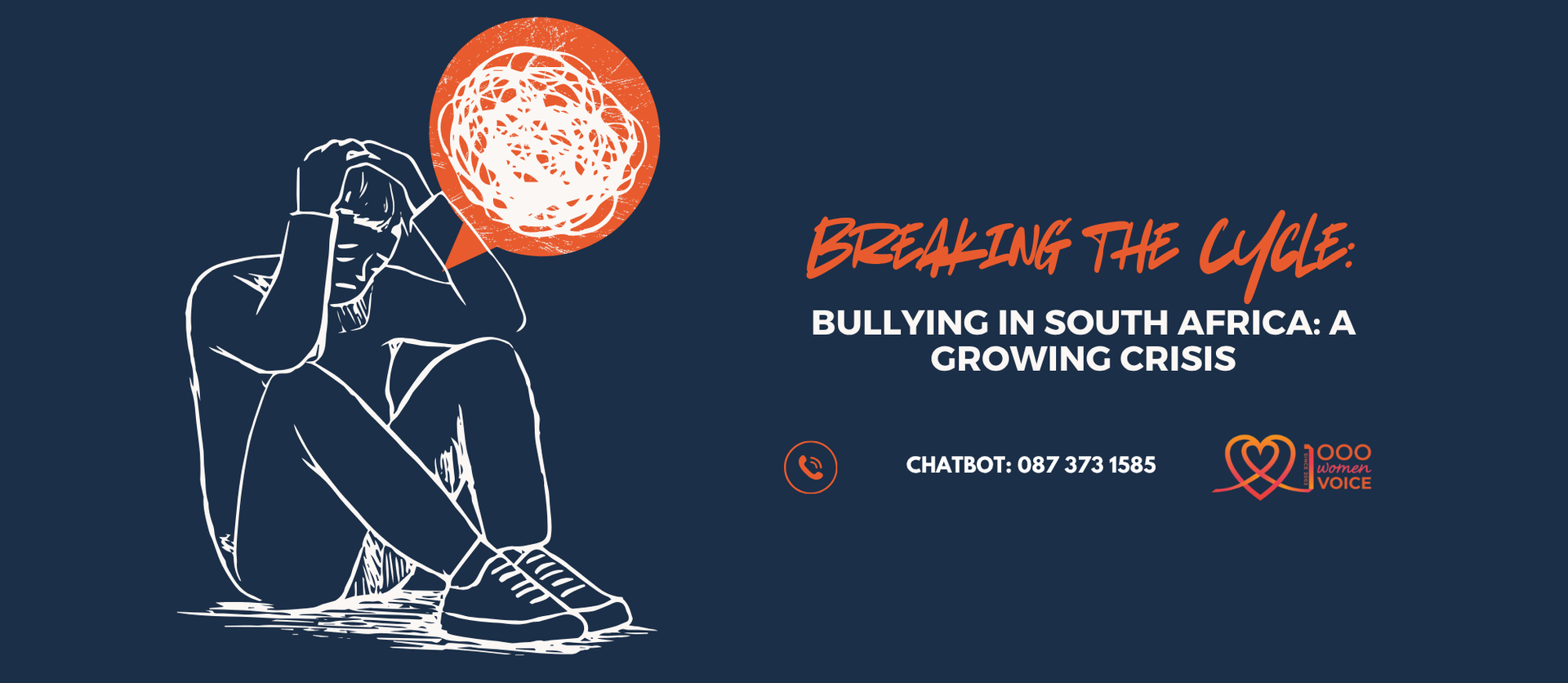
It doesn’t always make headlines. It doesn’t always leave visible bruises. But every day, across South Africa, children are walking into classrooms carrying fear, shame, and silence.
Nearly 40% of learners experience bullying. One in three teenagers faces it online — where it follows them home, into their bedrooms, onto their phones, long after the school bell rings. This is not “part of growing up.” It is harm. It is trauma. It is a national emergency.
April marks Stress Awareness Month — a reminder that for many young people, stress is not an abstract concept. It is lived. It is daily. And bullying is one of its most relentless drivers. “Children are carrying silent scars,” says Tina Thiart, Co-Founder and Trustee of 1000 Women Trust. “From playgrounds to WhatsApp groups, bullying is constant. And its impact runs deep.”
Behind the statistics are real consequences: anxiety, depression, isolation, and in the most devastating cases, suicidal thoughts. Research continues to show a direct link between bullying and long-term mental health challenges — affecting not only how children learn, but how they see themselves and their place in the world. For many, school becomes a place to escape from, not to. An estimated 100,000 learners stay away from school each year because of bullying.
And yet, most suffer in silence.
67% of learners do not report bullying because they believe nothing will change.
That silence creates space for harm to continue. It allows bullying to thrive unchecked.
Globally, institutions like the Centres for Disease Control and Prevention identify bullying as a major risk factor for suicide-related behaviour. The message is clear: prevention cannot sit with one group alone. It requires all of us.
Schools. Families. Communities. Government. Civil society.
“This is a collective responsibility,” Thiart says. “And it demands urgent, coordinated action.”
1000 Women Trust is calling for a shift from reaction to prevention, from silence to accountability.
Schools must adopt survivor-centred anti-bullying policies and strengthen mental health support systems. Parents and caregivers must create safe spaces for honest conversations about bullying, about online safety, about what children are experiencing but may struggle to name. Government and civil society must recognise bullying prevention as central to tackling broader issues like gender-based violence and youth suicide.
Because bullying does not exist in isolation. It is part of a larger culture and if left unchallenged, normalises harm.
The solution begins with culture change. An anti-bullying culture where every learner understands what respect looks like, where reporting is safe and taken seriously, and where accountability is visible — is not optional. It is essential.
“Bullying is not children being children,” Thiart emphasises. “It is a public health crisis that robs young people of their safety, dignity, and sometimes their lives.”
At 1000 Women Trust, the commitment is clear: amplify survivor voices, equip communities, and ensure that every child can learn and grow without fear.
More than 11,000 teachers, parents, and learners have already accessed the Trust’s free anti-bullying resources.
But this work cannot be done alone.
If you are a parent, teacher, or community member, you are part of the solution.
Join the movement. Start the conversation. Take action!
1. To access 1000 Women Trust’s Anti-Bullying training on WhatsApp, send “Hi” to 087 373 1585.
2. To order the Toolkit send a WhatsApp to 061 469 0479 provide the Paxi address
3. Visit www.antibully.co.za for all the information and free downloads
4. To organise an intervention at your school email info@1000women.co.za